In Memoriam: Rev. Jesse Jackson
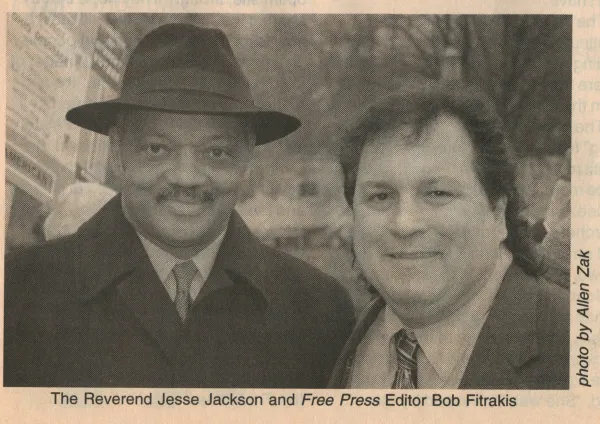
The Reverend Jesse Jackson arranged a conference call with me, his staff and others in Columbus right after the 2004 presidential election. The Free Press had reported on the suspicious election results giving George W. Bush a narrow victory in Ohio.
That phone call, including Mayor Michael Coleman and other community leaders, led to Jackson’s visit to our city and my relationship with him as we fought to tell the truth about the stolen election.
As reported in the Free Press in November 2004, “Preaching to a packed, wildly cheering central Ohio citizen congregation, Rev. Jesse Jackson blasted the presidential election back into the national headlines Sunday. Jackson said new findings cast serious doubt on the idea that George W. Bush beat John Kerry in Ohio November 2. A GOP ‘pattern of intentionality’ was behind a suspect outcome, he said. At stake is ‘the integrity of the vote’ for which ‘too many have died.’ ‘We can live with losing an election,’ he said. ‘We cannot live with fraud and stealing.’”
Jackson was the first “major national figure to come here challenging the idea that Ohio has given George W. Bush a second term in the White House. Jackson emphasized that the vote ‘has not yet been certified’ and demanded the removal of (then) Ohio Secretary of State Kenneth Blackwell from supervising the recount, which Jackson termed a case of ‘the fox guarding the chicken house.’ Blackwell co-chaired the Bush-Cheney campaign in Ohio and has been widely criticized for a series of partisan decisions that have thus far indicated Bush carried the state.”
In Jackson's hotel room, he called John Kerry and put me on the phone to brief him about the Ohio voting irregularities. He told Kerry, who refused to dispute Ohio's election results that "Those who do not stand with us now cannot expect us to stand with them in 2008."
Thanks to Jackson’s initiative the Free Press was able to gain access to ballots under the supervision of local election officials. Our research found massive irregularities in many Ohio counties. We held five public hearings in Ohio’s major cities where voters testified under oath about their votes switching on computerized voting machines, intimidation or being prevented from voting at the polls, long lines on Election Day, and polling locations moved without notice, among other methods of disenfranchisement.
Jackson helped arrange myself, Bill Moss, Cliff Arnebeck and others to testify before Rep. John Conyers’ Judiciary Committee in Congress about the Ohio voting irregularities. He introduced me to Senators Harry Reid, Hillary Clinton and Rep. Barbara Boxer and asked me to explain the irregularities to them. Conyers and his staff subsequently published a book titled “What Went Wrong in Ohio: The Conyers Report on the 2004 Presidential Election,” now available in the Library of Congress.
I drove with Jackson and others to Cleveland for him to meet with Ohio Rep. Stephanie Tubbs-Jones. She agreed to lead a challenge to Ohio’s electoral votes on the day the votes would be submitted in the Senate. On the way back I remember being amused when Jackson told me he wanted to stop at his favorite restaurant – Cracker Barrel. He was treated like a rock star by the female servers while we were there.
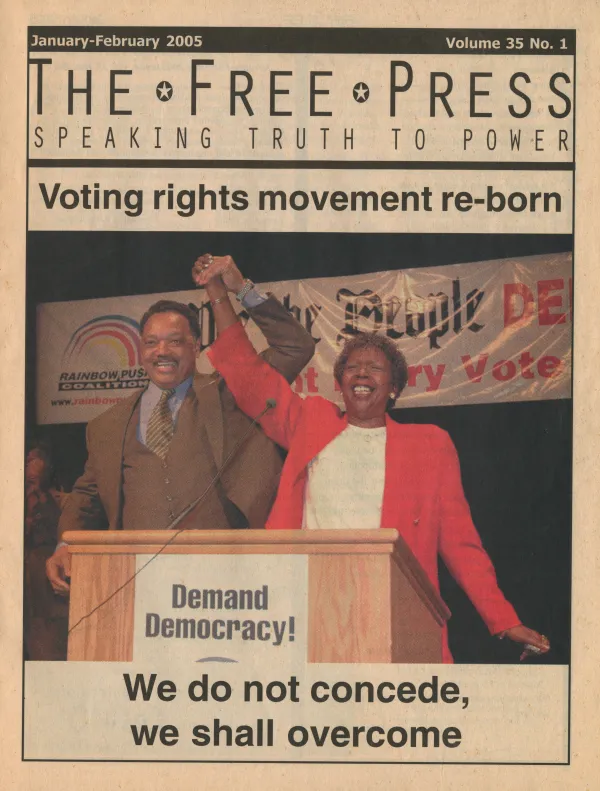
Senator Boxer agreed to sign on to the electoral challenge, the first over an entire state’s electoral slate. Jackson spoke out at a rally on the day of the challenge at an outdoor rally of election integrity activists. He said: “…Independent progressive political action went outside of the system…in many ways in places as remote as Warren County in Ohio, in Butler, Clermont. The remnant gained the right to vote in 1965; the remnant must protect the right to vote in the year 2005 and beyond… In many ways today, real leadership is tested…Some senators…have gone to Ukraine to investigate their election, they’ve gone to Iraq. But not one has gone to Columbus, Ohio!”
The argument could be made that the greatest civil rights hero in the post-MLK era was Jesse Jackson. I had the privilege of witnessing how he reinvigorated a dormant voting rights movement and will continue to be inspired by his presence as he fought alongside us in the trenches.
As the Free Press reported: "'This is not about John Kerry versus George Bush,'" said Jackson. 'This is about Medgar Evers and Fannie Lou Hamer and Viola Liuzzo. About Goodman, Cheney and Schwerner, and twenty-seven years in prison for Nelson Mandela,' he said, referring to heroes of the movements for equal rights. 'It's about a will to dignity. It's not too much to ask for our vote to count.'"